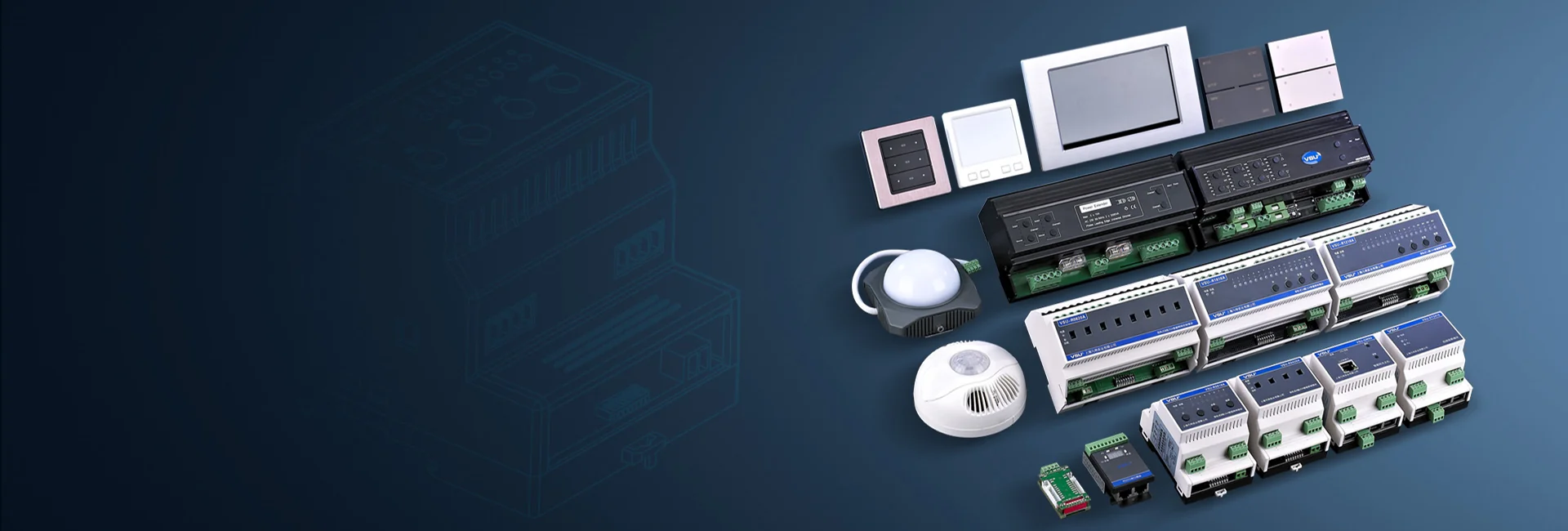




E1–X1 packages · brand selection grid
Back to Solutions
Chain rollout
Phased deployment, spare-part interchange and standard store templates.
Engineering Reference · Chain Rollout
Chain procurement sells a replicable hardware BOM
Hidden costs in chain projects come frominconsistent SKUs, difficult spare-parts transfers, and re-selecting equipment store by store. PurePoint Smart serves regional brands and system integrators—first run the flagship store RCU, panels, and card-power list, thenversion the BOM, wiring diagrams, and acceptance checklistsso new stores build to drawing and stock by part code.
Per-room hardware bundles and four wiring routes are inStandard Guestroom Control · Engineering Reference; this page coversstandard lists and bulk delivery during chain expansiononly.
- 5 tiersE1–X1 packages
brand selection grid - v2.xBOM version tree
clone · rollback - 5 stagespilot → bulk
expansion path - Bulkunified spare codes
cross-store transfer
Brand package tiers · industry-standard five tiers
Chain procurement typically selects by investment tier—the standard library locks BOM and scene-package versions per tier so new stores select rather than redesign.
E1
Economy
Card power + door lock + basic panels
S1
Standard
+ curtains + door sign DND/MUR
C1
Comfort
LCD scenes + dimming + RS485 open protocol
P1
Premium
Comfort panel matrix + public-area linkage
X1
Custom
Luxury panels + banquet / multi-store customization
Delivery flow: requirements → drawings/BOM → RCU production → logistics → on-site commissioning and after-sales (industry-standard five stages).
Five-tier package BOM comparison
Group bid attachments can cite this—tier, circuit count, and panel mix finalized once; exact models per signed BOM version. Summary atChain Standard BOM.
| Item | E1 Economy | Notes |
|---|---|---|
| RCU | 8-channel wireless gateway | Wireless route |
| Panels | wireless ×2 | Bedside simplified |
| Card power | card slot | Card power |
| Door lock | RFID card lock | Basic access |
| Circuits | 6–8 | No dimming |
| Item | S1 Standard | Notes |
|---|---|---|
| RCU | 16-channel wired / RS485 | Wired/485 |
| Panels | 6-scene key ×2 + entry triple | 6-point BOM aligned |
| Card power + door sign | Card slot + DND/MUR | Door sign |
| Curtains | Single motor | Motorized shading |
| Circuits | 12–16 | Includes FCU module |
| Item | C1 Comfort | Notes |
|---|---|---|
| RCU | 24-channel + dimming | RS485 open protocol |
| Panels | LCD scene panel | Standard / Comfort tier |
| HVAC | FCU/VRF module | Welcome preset |
| Dimming | 2-channel 0–10V | Scene linkage |
| Circuits | 20–24 | Includes dual curtain |
| Item | P1 Premium | Notes |
|---|---|---|
| RCU | Modular 32-channel+ | Slot expansion |
| Panels | Comfort matrix + OEM | Multi-zone key layout |
| Public areas | Corridor / elevator lobby linkage | Public areas |
| Security | SOS + full door-contact points | Security |
| Circuits | 28–32 | Optional sub-metering |
| Item | X1 Custom | Notes |
|---|---|---|
| RCU | Modular chassis + redundancy | Banquet / multi-store custom |
| Panels | Luxury OEM finish | Luxury reference |
| Curtains | Dual motor multi-channel | Sheer / blackout independent |
| Protocol | Custom mapping table | Protocol integration |
| Circuits | 32+ per-zone BOM | Single project, single version |
Common pitfall
Treating chain like single-store projects
- Each store gets its own design and programming—opening timelines unpredictable
- Panel models and scene semantics differ store to store—guest experience breaks across locations
- HQ cannot see unified SKUs—spare-part codes differ per store
- Protocol integration redone every store—integration cost uncontrollable
- Spare-part models scattered—cross-store transfer nearly impossible
PurePoint Smart chain path
Standard BOM + bulk supply + version control
- Flagship store locks the list—new stores clone, not redesign
- Brand-level BOM and panel style versioning—unified firmware iteration
- Shared spare-parts pool—cross-store transfer by unified codes
- Protocol mapping tables in the standard—integrators commission new stores by table
- Bulk production lead times predictable—tiered SLA can be written into contract
Five-stage expansion path
Based on international brand group delivery and domestic chain practice—not a one-shot "big system" but phased scale-up.
1
Flagship store
Selection, points, wiring acceptance—prove one primary store type
2
Standard library
BOM, scene packages, UI, acceptance checklist archived
3
Bulk stores
Build to BOM—remote pre-commission + on-site spot checks
4
Protocol commissioning
Integrators connect PMS/guest control per standard mapping (optional)
5
Spares & iteration
Unified codes for replacement; scene/firmware versions pushed by region
Standard library version tree · what HQ manages
Chain engineering centers onversioned, cloneable, rollback-ready BOM assets—the diagram shows how standard lists branch; new stores clone a version, firmware pushes by region, outlier stores can be frozen individually.
v2.4.1Brand standard BOM library
BOMHardware listv2.4
26 stores2 stores v2.3
ScenesScene packagesv3.1
24 storesOTA push in progress → East China 4 stores
UIPanel interfacev1.8
28 stores
ProtocolIntegration mappingv2.0
28 stores
AcceptChecklistv1.5
New store #29 cloning
Clone new store
Pick tier + version snapshot from standard library—generate construction pack and pre-commission files.
Regional firmware push
Scene / firmware by brand line or climate zone—supports canary and rollback.
Spare-parts benchmark
Cross-store replacement rate on same version—flag abnormal batches. SeeEnergy saving.
Engineering alerts
Offline / low battery / comm fault → integrator ops response; SLA can be in contract.
Third-party remote ops atProtocol integration (optional); this page emphasizesBOM version assets.
What the standard library contains
Chain hidden cost is "inconsistency." The table lists engineering assets PurePoint Smart recommendsversioning—for bid documents, not operations software features.
| Standard item | Locked content | Chain value |
|---|---|---|
| Hardware BOM | RCU, panels, locks, card power—approved SKU list | Cross-store spare transfer, procurement leverage |
| Scene packages | Welcome / sleep / cleaning semantics and params—unified version | Consistent guest experience across stores; OTA rollback |
| Panel UI | Standard / Comfort tier icons and copy guidelines | Brand recognition; less branch-level UI drift |
| Acceptance checklist | Points, wiring, protocol commissioning, training—four mandatory sections | Controlled franchise/managed-store handover |
| Protocol mapping | Check-in/room change/checkout driving card power and locks—standard register table (integrator) | Consistent multi-store commissioning; less repeat dev |
| Energy baseline | Reference sub-metering by store type and climate zone | Flag outlier stores; replicate best practice |
Deep dive atValue topic · Chain standardization.
Who interfaces with whom
Chain decision chain: HQ procurement sets BOM, branch engineering builds to drawing, integrators handle protocol—PurePoint Smart supplies hardware and documentation.
Group PMS / guest-control software (third party · optional)
Developer API· standard mapping · firmware version library
Store A / B / C …· engineering per BOM · local RCU/gateway
Card power · panels · modules · locks · door-sign hardware nodes
Engineering reference (7 topics)
Further reading · not repeated here